Protests took place in Tel Aviv, Jerusalem, Haifa, and Beersheba, as a survey found broad but uneven support among Jewish Israelis for Operation Roaring Lion.
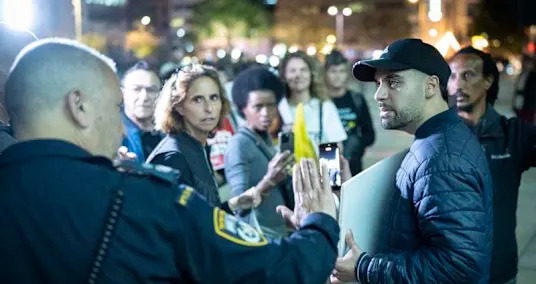
Israel Police arrested 21 anti-war protesters Saturday night as demonstrations against the conflict with Iran expanded in multiple cities despite restrictions on public gatherings.
Protests took place in Tel Aviv, Jerusalem, Haifa, and Beersheba, with hundreds of participants reported in Tel Aviv and Jerusalem and about 100 in Haifa, marking the largest turnout since weekly demonstrations began. Authorities said 13 people were arrested in Tel Aviv and eight in Haifa.
Police said the gatherings were not approved under Home Front Command regulations that ban events with more than 50 people. Officials said the increase in turnout followed calls by groups opposing the government to protest despite the restrictions.
“During a situation assessment that took place at the scene with a Home Front Command representative… it was clarified that there was a real risk to human life and accordingly, Yarkon [precinct] police commander Tzachi Sharabi ordered the gathering to be dispersed,” police said.
Hadash-Ta’al chairman Ayman Odeh, an Arab lawmaker involved in the protests, criticized the police response, calling officers fascists “in the service of the government” and saying they were afraid of “the heroic citizens who went out, despite everything, to make their voice heard.”

Survey shows broad, uneven support for war
The demonstrations come as a March 2026 survey by the Israel Democracy Institute found broad but uneven support among Jewish Israelis for Operation Roaring Lion. Support was strongest on the Right at 87% and about half on the Left.
The survey also found that Jewish and Arab respondents largely agreed that Iran’s resilience has been stronger than expected. Most Jewish respondents said Israeli society could sustain the campaign for up to one month, while 28% said as long as needed. Arab respondents were less optimistic about how long the public could endure the conflict.
A majority of Jewish respondents said Prime Minister Benjamin Netanyahu’s decision was driven by security considerations, while most Arab respondents viewed it as political.
NEUESTE BEITRÄGE
- 1
 Step by step instructions to Contrast Lab Precious stones and Normal Jewels17.10.2023
 - 2Unsold Rams May Be Less expensive Than You Suspect06.11.2023
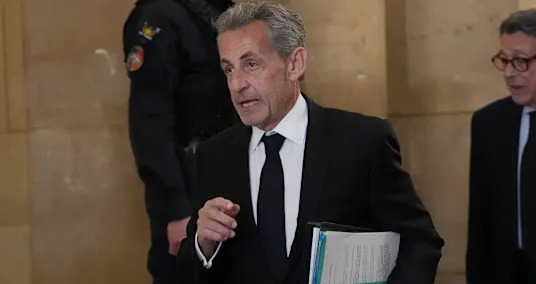
- 3Sarkozy says he owes France 'the truth' as he challenges conviction over alleged Libya funding07.04.2026
- 4The Drone Video of the Year is stunning – you've not seen Namibia like this26.03.2026
- 5Individual Preparation Administrations to Raise Your Wellness Process06.06.2024




Ähnliche Artikel
- Reclassifying Achievement: Individual Accounts of Seeking after Interests22.09.2023
- The Most Paramount Crossroads in Olympic History07.07.2023
- These men carry towers of birds through Mexico's streets. They say their tradition is dying out.29.03.2026
- IDF confirms Iranian missile fragments hit near Kirya, multiple cars ablaze in Ramat Gan04.04.2026
- November Lease Deals for the 2025 Kia EV6 are Too Good to Pass Up27.11.2025
- Apollo vs. Artemis: What to know about NASA's return to the moon29.03.2026
- What were the little white pills found in Tiger Woods's pocket at the scene of his crash? What to know about hydrocodone.31.03.2026
- Manual for 10 Scrumptious Specialty Mixed drinks05.06.2024
- Nature's Best: A Manual for Beautiful Train Rides05.06.2024
- Consumer experts: German petrol hikes rule won't bring down prices02.04.2026