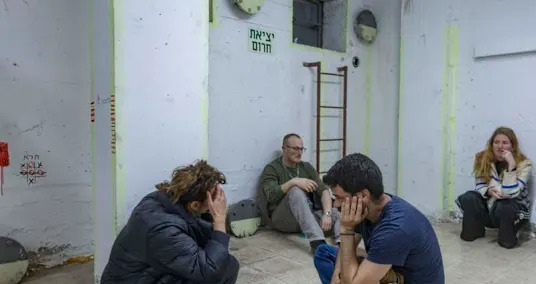
The data reflects the feelings of the young people participating in the survey, but paints a worrying picture that is mirrored in Aluma’s ongoing work in the field.
Amid the ongoing war and the upheaval it creates in everyday life, the Aluma organization, which works to expand mobility among young people in Israel and to provide support at life's crossroads of service, education, and employment, conducted an internal survey among 237 young men and women it supports. The results point to a severe and deepening crisis beneath the radar.
The data reflects the feelings of the young people participating in the survey, but paints a worrying picture that is mirrored in Aluma’s ongoing work in the field.
According to the data and Aluma’s work, many young people feel that the government does not see them and does not provide a sufficient response to their needs.
Only 3% of respondents felt that the state cares about the future of young people in Israel, whereas 74% stated that they feel that the state does not see them and does not care about their future at all, or only to a small extent.
The main impact is in the field of education, according to Aluma’s findings, with 64% of young people reporting damage or freezing of their academic plans due to the war, and 45% listed education as their primary concern.

About a quarter of those surveyed stated that they are especially worried about their economic situation.
Growing instability, diminishing optimism
At the same time, the feeling of instability is growing. A majority of the young people surveyed, 57%, reported uncertainty as a description of their feelings about their future in Israel. Only 30% felt optimistic about their future in Israel.
The potential consequences of the situations are already visible, with about 30% of young people surveyed having thought about or considered leaving Israel for an extended period, with 9% of them seriously considering or planning to leave.
Dr. Tami Halamish Eisenman, CEO of Aluma, said that "the young people we meet every day are at the very turning points of their lives - after military service, at the beginning of their studies, on the path to independence. The war caught them there, and we see the impact.”
“As in any crisis, they are the first to be affected and among the last to be talked about. This survey does not surprise us; it confirms what we hear from the field,” Eisenman said.
"The question is not whether there is a problem, but when we start addressing it. Without focused attention, we may find ourselves in a few years with much deeper gaps."
NEUESTE BEITRÄGE
- 1
 Find the Standards of Powerful Cooperation: Accomplishing Cooperative energy and Coordinated effort14.07.2023
 - 2Advocacy groups react after Mattel introduces 1st Barbie doll with autism12.01.2026
- 3Vote In favor of Your Favored Shades06.11.2023
- 4Far-right German youth group delegates seek deportations, remigration29.11.2025
- 5Single women risk rape and exploitation in search for better life in Europe06.12.2025


Ähnliche Artikel
- Ukraine proved this drone-killer works. Now, the West is giving it a shot.18.11.2025
- Instructions to Adjust Work, Life, and Seeking after a Web based Advertising Degree19.10.2023
- American tourists left stranded in the Caribbean following flight cancellations after airspace closed for Maduro operation05.01.2026
- Display of Netanyahu's severed head 'incites public to murder PM', Likud says in official complaint09.12.2025
- What Middle East Conflict Could Mean For The World’s Largest Whale Shark Gathering29.03.2026
- Top Fascinating Organic products: Which One Might You Want to Attempt?01.01.1
- Beating Scholastic Difficulties: Understudy Examples of overcoming adversity25.09.2023
- UK forecast to face weaker growth and higher inflation from Iran war26.03.2026
- This Asian country is the next hot travel destination, and this is one of its best hotels07.04.2026
- New study measures titanium in Apollo rock to uncover Moon’s early chemistry27.03.2026