-
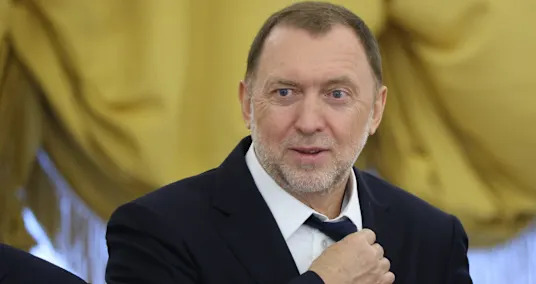
Russian tycoon Oleg Deripaska is calling for 12-hour, six-day workweeks.
-
The aluminum billionaire says longer work could help Russia speed through economic upheaval.
-
He says Russia's edge is its ability to rally and work harder in a crisis.
Russians should consider working 12-hour days, six days a week, as the country grapples with a deeper economic shift, Russian billionaire Oleg Deripaska said on Monday.
Referring to what he described as a changed global reality, Deripaska framed the country's slowing economy as more than a typical downturn driven by interest rates or monetary policy.
"This crisis is deeper. It is caused by a difficult transformation: from the global opportunities we once had to regional ones, with all sorts of restrictions," Deripaska wrote in a Telegram post.
He argued that Russia should tap into what he described as its only real resource — a "national characteristic."
"In difficult moments, we know how to pull ourselves together and work more," wrote Deripaska, the founder of Rusal, a major aluminum producer.
Longer working hours, he suggested, could help the economy adjust more quickly to changing global conditions.
"The sooner we switch to this new schedule — from 8 a.m. to 8 p.m., including Saturdays — the faster we will complete this transformation," the industrial magnate wrote.
His comments come as Russia's economy navigates a shifting landscape shaped by geopolitical tensions and changing trade flows.
Russia, a major energy exporter, has been benefiting from a surge in prices, with crude markets jolted by escalating tensions in the Middle East and disruptions to key supply routes.
Oil and gas revenues have historically accounted for more than a third of Russia's federal budget, which has been under pressure from sweeping sanctions in recent years. Official estimates showed Russia's economy grew 1% in 2025 — down sharply from 4.3% growth in 2024.
Disruptions to tanker traffic through the Strait of Hormuz — a critical global oil chokepoint — alongside a limited US sanctions waiver on some Russian shipments, have reshaped trade flows as countries scramble for supplies.
However, Deripaska had warned earlier this month that the conflict in the Middle East could weigh on global — and Russian — growth despite higher oil prices.
Benchmark crude oil futures are over 70% higher this year and trading above $100 per barrel.
Read the original article on Business Insider
NEUESTE BEITRÄGE
- 1
 Netflix is releasing a documentary on Elizabeth Smart. What to know about her kidnapping, rescue and where she is now.10.12.2025
 - 2Find the Lively Food Markets of South America13.07.2023
- 3What an expert on the gut microbiome eats in a day26.03.2026
- 4Astronauts on the ISS watched NASA's historic Artemis 2 launch from space03.04.2026
- 5Israel reports first missile fire from Yemen since start of Iran war28.03.2026



Ähnliche Artikel
- 'Crammed into a cell with vermin at New Year'01.01.2026
- Orcas seen hunting great white sharks to eat their livers in drone footage recorded in Mexico04.11.2025
- Figure out How to Use Your Nursing Abilities for Better Compensation17.10.2023
- IDF, police arrest eleven for criminal, terror-related activity over weekend06.12.2025
- Like 'accelerating from stationary to supersonic flight': Europe's Hera probe boosts speed, stays on course for November asteroid rendezvous25.03.2026
- My daughter is in the #1 movie in the country. She still has to finish her math homework.24.11.2025
- Fact Check: Some Bridge Photos Circulating Do NOT Show The Hongqi Bridge That Collapsed In Southwest China Nov. 11, 202512.11.2025
- Danish warship sunk by famed British admiral discovered after 225 years01.04.2026
- Carrying on with a Sans plastic Way of life: Individual Examinations in Maintainability25.09.2023
- What is Fusarium graminearum, the fungus a Chinese scientist pleaded guilty to smuggling into the US?12.11.2025