When you buy through links on our articles, Future and its syndication partners may earn a commission.

The first test flight of Landspace's Zhuque-3 rocket ended in a fiery explosion after successfully reaching orbit.
Chinese company Landspace launched its 216-foot (66-meter) stainless steel Zhuque-3 rocket from the Jiuquan Satellite Launch Center in the Gobi Desert in northern China on Tuesday (Dec. 2). The reusable, methane-liquid-oxygen-powered rocket successfully placed its expendable second stage in orbit, according to a statement from Landspace.
But after making a successful reentry, the rocket's first stage booster appeared to lose an engine during its landing burn and catch fire before crashing into the ground in a spectacular explosion. "An anomaly occurred as the first stage approached the designated recovery zone. No personnel safety issues occurred," Landspace wrote on social media. The company is now investigating the anomaly to discover its root cause.
Despite the landing failure, Landspace is hailing the test flight as a success, adding in its social media post that "China's first rocket recovery attempt achieved its expected technical objectives." These include verifying Zhuque-3's recovery system, engine throttling, and attitude control. Stills from videos of the crash landing show that the first stage landed within just meters of its target landing zone.
Zhuque-3 resembles SpaceX's dependable Falcon 9 rocket; both rockets feature a reusable first stage and an expendable upper stage and are powered by nine engines.
Zhuque-3's Tianque-12A engines are powered by a mixture of liquid methane and liquid oxygen (methalox), however, while the Falcon 9's Merlin engines burn liquid oxygen and rocket-grade kerosene.
Zhuque-3's payload capacity is similar to Falcon 9's as well, able to loft 40,350 pounds (18,300 kilograms) to low Earth orbit (LEO). Falcon 9, meanwhile, can send 50,265 pounds (22,800 kg) to LEO.
A Landspace previous rocket, Zhuque-2, became the world's first methane-powered rocket to reach orbit in July 2023. SpaceX's Raptor engine, which powers its Super Heavy booster and its Starship second stage vehicle, also burns liquid methane and liquid oxygen.
The Zhuque rockets are named for the vermillion bird from Chinese mythology that represents the fire element in Taoist five-element cosmological system.
NEUESTE BEITRÄGE
- 1
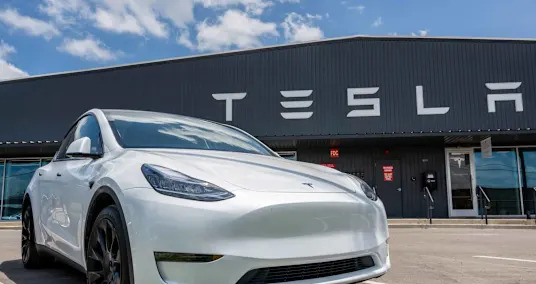
 Tesla Stock Hasn’t Looked This Cheap in a While02.04.2026
 - 2Exclusive-Drugmakers raise US prices on 350 medicines despite pressure from Trump01.01.2026
- 3Cheetos and Doritos to launch new versions without artificial dyes14.11.2025
- 4Israel has clear objectives south of Litani River, but will face difficult choices further north25.03.2026
- 5Jillian Michaels put me at the center of a body positivity debate. She's not entirely wrong about obesity.25.03.2026




Ähnliche Artikel
- French lawmakers narrowly approve health care budget, suspending Macron's flagship pension reform09.12.2025
- Instructions to Arrange Your Compensation During Medical caretaker Prospective employee meetings17.10.2023
- Step by step instructions to Pick the Right Dental specialist for Your Dental Inserts Technique19.10.2023
- Find the Standards of Powerful Cooperation: Accomplishing Cooperative energy and Coordinated effort14.07.2023
- Figure out how to Guarantee Your Dental Embeds Endure forever19.10.2023
- Ocean side Locations for a Family Excursion01.01.1
- German inflation soars to 2.7% in March as Iran war drives up prices30.03.2026
- Figure out How to Ascertain the Restitution Time frame for Your Sunlight based chargers17.10.2023
- Taylor Frankie Paul's domestic violence case is fueling discussions about DARVO. Experts say terms like this shouldn't be used lightly.26.03.2026
- Shredded cheese recall: Multiple brands sold at Aldi, Target and Walmart affected over potential metal fragment contamination03.12.2025